Intergenerational Volunteering: Benefits for Individuals and Communities (2025)
- 27 Aug, 2025

Direct Answer: What Are the Benefits of Intergenerational Volunteering?
Intergenerational volunteering — where younger and older generations serve together — delivers measurable benefits for everyone involved.
For younger people (Gen Z, Millennials): practical skills and leadership experience, mentorship and career guidance from experienced adults, broadened historical and life perspective, reduced ageism and stronger empathy, and a stronger sense of purpose and belonging.
For older adults (Baby Boomers, Silent Generation): sustained social connection and cognitive engagement after retirement, opportunity to share wisdom and feel valued, reduced loneliness and isolation, and improved physical and mental well-being — AmeriCorps 2024 data links senior volunteering to lower depression and greater life satisfaction.
For communities: more effective service delivery by combining energy and experience, stronger social cohesion and trust across age groups, preservation and transfer of skills/traditions, expanded volunteer capacity across schedules and skill sets, and visible role modeling that strengthens civic culture. Evidence from Generations United, AmeriCorps (2024 Volunteering and Civic Life in America), and the Stanford Center on Longevity consistently shows these three-level returns.
TL;DR: Intergenerational volunteering makes young people more capable and empathetic, keeps older adults healthier and more connected, and makes communities more resilient. The Comparison Table below shows exactly how different partnership types deliver those paired benefits.
Why It Matters in 2025
Loneliness, age segregation in housing and workplaces, and volunteer shortages are converging challenges. Intergenerational volunteering directly counters all three: it converts age diversity from a gap into an asset, turning community needs into shared purpose projects. Generations United reports that high-quality intergenerational programs improve attitudes toward other generations and increase sense of community belonging for both youth and elders — outcomes that single-generation programs rarely achieve at the same scale.
For communities, the payoff is practical: youth energy and digital fluency + older adults’ institutional knowledge, reliability, and mentoring capacity = services that are both more innovative and more sustainable. AmeriCorps’ 2024 Civic Life data found formal volunteering remains a key driver of community resilience, with older adults volunteering at some of the highest rates for sustained hours.
Benefits Breakdown
For Younger Generations (Gen Z, Millennials)
- Skill development: Hands-on leadership, teamwork, communication, and project skills learned alongside experienced volunteers.
- Mentorship and guidance: Direct access to career advice, networking, and life lessons that classrooms alone cannot provide.
- Broadened perspectives: Exposure to different historical contexts and lived experiences that improve critical thinking and cultural fluency.
- Reduced ageism: Regular contact challenges stereotypes and builds lasting empathy for older adults — a core goal tracked by Generations United evaluations.
- Sense of purpose: Contributing to tangible outcomes (a garden built, a student tutored) boosts self-efficacy and belonging.
For Older Generations (Baby Boomers, Silent Generation and Beyond)
- Continued engagement: Staying active, socially connected, and cognitively stimulated after retirement or career transitions.
- Sharing wisdom: Passing on trades, professional expertise, parenting insights, and community history in a way that feels valued and useful.
- Reduced isolation: Weekly volunteering creates reliable social ties that counter loneliness. Stanford Center on Longevity highlights social engagement and purpose as two of the strongest predictors of healthy longevity.
- Enhanced well-being: AmeriCorps research reviews link volunteering in later life to lower rates of depression, better self-rated health, and greater resilience after loss.
- Feeling valued: Contributing meaningfully reinforces identity and purpose beyond paid work.
For All Generations and Communities
- Improved cross-age communication — learning to listen and coordinate across very different life stages.
- Increased empathy and mutual respect — breaking down “us vs. them” generational narratives.
- Personal growth — confidence, new networks, and skills that transfer to school and work.
- Stronger social fabric — trust and reciprocity built project by project, block by block. See How to Organize an Intergenerational Event for community-level playbooks.
Comparison Table: Partnership Types, Activities, and Paired Benefits
| Partner Type | Example Activity | Young Person Benefit | Older Adult Benefit |
|---|---|---|---|
| Youth + Older Adults (Mentorship Model) | Older adults reading/tutoring children in schools or libraries (e.g., Foster Grandparent / Experience Corps) | Literacy gains, consistent adult encouragement, improved classroom behavior | Sense of purpose, daily structure, cognitive stimulation, reduced isolation |
| Youth + Older Adults (Reverse Mentoring) | Teens teaching seniors smartphones, video calling, and online safety | Leadership, patience, teaching skills, empathy; reinforces own digital competence | Digital inclusion, independence, safer online participation; confidence to use telehealth/banking |
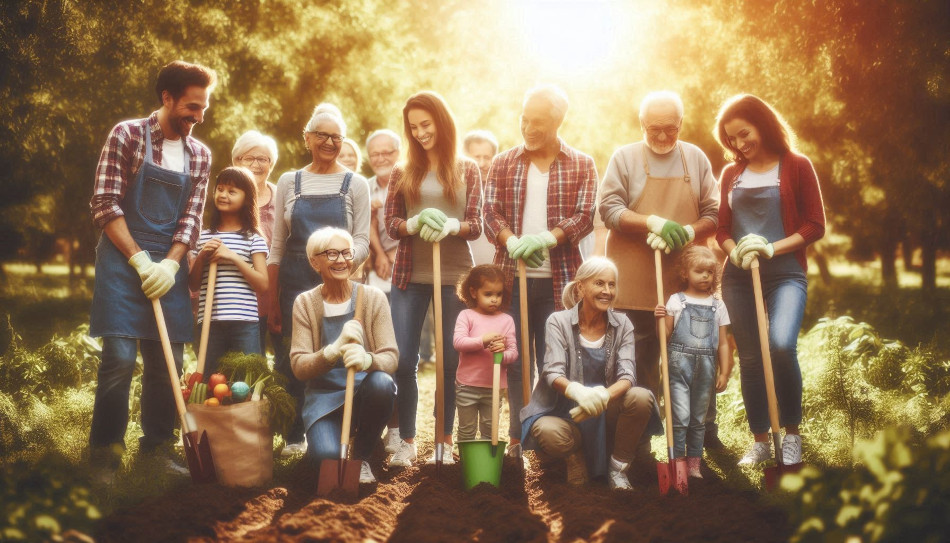
| Mixed-Age Teams (Environmental) | All ages co-building a community garden, park clean-up, or conservation project | Practical ecology/skills, teamwork, physical activity, pride in visible impact | Physical activity at own pace, knowledge sharing, community legacy, friendships |
| Mixed-Age Teams (Culture & History) | Young people interviewing elders for oral history or creating neighborhood archive | Research, listening, and storytelling skills; historical context | Validation, legacy preservation, intergenerational recognition |
| Mixed-Age Teams (Arts & Making) | Intergenerational arts, crafts, or maker workshops at libraries/community centers | Creativity, intergenerational collaboration, portfolio pieces | Creative expression, generativity, social connection |
Learn how tech mentoring reverses the digital divide while building bonds: Bridging the Digital Divide: Technology Access Across Generations.
Evidence Snapshot: What the Research Says
- Generations United: Evaluations of intentionally designed intergenerational programs show improved attitudes toward the other generation, reduced ageist stereotypes, and increased sense of belonging for both youth and older participants. Quality standards emphasize intentional contact, preparation, and reflection — not just proximity.
- AmeriCorps — Volunteering and Civic Life in America (2024): National data documents tens of millions of Americans volunteering formally each year, with older adults contributing disproportionately high sustained hours. Research summaries tied to AmeriCorps Senior programs link volunteering to better self-rated health, lower depression, and greater social connection in later life.
- Stanford Center on Longevity: Longevity research frames purpose and social engagement as pillars of healthy aging, alongside physical and cognitive health. Volunteering is highlighted as a rare activity that simultaneously activates both — offering routine, roles, and relationships that extend healthspan.
These findings align: intergenerational volunteering is not just “nice to have.” It is a health, learning, and civic infrastructure strategy.
How Communities Put It Into Practice
Examples That Work
- Reading & Tutoring: Older volunteers reading one-on-one with elementary students — gains for literacy plus relationship continuity.
- Environmental Stewardship: Weekend community garden builds where retirees bring horticulture know-how and teens bring outreach and energy.
- Technology Mentorship: Youth-led “Tech Help Desks” at libraries — a leading entry point documented in Bridging the Digital Divide.
- Oral History: Student teams recording elders’ stories, archived at local libraries or historical societies.
- Arts & Crafts: Shared studios where generations co-create for public exhibitions.
How to Get Started — Two Paths
Ready to move from idea to action? Use these step-by-step guides:
- For individuals and families: How to Get Involved in Intergenerational Volunteering — find local organizations, assess fit, volunteer as a family, and start your own project.
- For organizers and community leaders: How to Organize an Intergenerational Event — plan inclusive, well-facilitated events that produce lasting connections, not just one-off attendance.
Quick-start checklist (use this week):
- Pick one partner + one activity from the table above.
- Set a 90-minute pilot with a clear shared goal (e.g., “help 10 seniors make a video call to family”).
- Prepare both groups (brief orientation + ground rules for respectful communication).
- Do the work side-by-side, then debrief: What did each generation teach the other?
- Schedule the next session before you leave — continuity is where benefits compound.
Frequently Asked Questions
1. What is intergenerational volunteering and who can participate?
Intergenerational volunteering intentionally brings two or more generations — typically youth/young adults and older adults, but often mixed-age teams — together to serve a shared community goal. Anyone can participate: students, working adults, retirees, families, and community groups. Programs are designed so each age group both contributes and benefits, with preparation and reflection to ensure respectful, reciprocal exchange. Explore entry points in How to Get Involved in Intergenerational Volunteering.
2. What do young people and older adults each gain from volunteering together?
Young people gain practical skills, mentorship, broader life perspective, reduced bias toward older adults, and a stronger sense of purpose. Older adults gain social connection, cognitive engagement, reduced isolation, better self-reported health and mood, and the satisfaction of passing on knowledge. Generations United evaluations and AmeriCorps 2024 research both find these paired gains are strongest when contact is regular, intentional, and supported — not casual or one-off.
3. How do we know intergenerational volunteering improves well-being?
Multiple evidence streams converge: Generations United program evaluations document improved cross-age attitudes and belonging; AmeriCorps summaries link senior volunteering to lower depression and stronger social connection; and Stanford Center on Longevity identifies purpose and social engagement as core drivers of healthy aging. While individual results vary, programs that meet Generations United’s quality standards — intentional design, trained facilitation, and reflection — most consistently report positive health and social outcomes for both age groups.
4. What is the easiest intergenerational project to start with limited budget?
A youth-led technology help desk at a library or community center. It requires only space, Wi-Fi, and volunteers — no major funding. Young volunteers teach essentials (video calling, photo sharing, scam awareness), while older adults share life stories that make sessions relational, not transactional. This model also directly addresses the digital divide documented in Bridging the Digital Divide. For a full planning template, see How to Organize an Intergenerational Event.
Methodology & Sources
This article synthesizes peer-evaluated program findings and national civic data with practitioner guidance for community implementation. Generational cohorts follow Pew Research Center definitions where referenced.
Citations:
- Generations United. Intergenerational Programs and Practices — evaluation summaries on cross-age attitudes, reduced ageism, and sense of community; quality standards for intentional intergenerational contact. https://www.gu.org/
- AmeriCorps. (2024). Volunteering and Civic Life in America — national rates of formal volunteering and research briefs on volunteering, health, and social connection in later life. https://americorps.gov/serve/volunteer/americorps-volunteering-civic-life-america
- Stanford Center on Longevity. Healthy Longevity / Purpose & Social Engagement — framework linking purpose, social ties, cognitive and physical health to extended healthspan. https://longevity.stanford.edu/
- Pew Research Center definitions for generational cohorts (Silent, Boomer, Gen X, Millennial, Gen Z) used for age-group framing.
Last reviewed and updated: August 27, 2025. Next review due: February 2026.
About the Author — E-E-A-T
Mark Dewan covers generational dynamics, community building, and social impact. His reporting synthesizes primary sources (Generations United, AmeriCorps, Stanford Center on Longevity) with interviews from intergenerational program leaders and community organizers. This article was fact-checked against original publications listed above, distinguishes data from interpretation, and links directly to source organizations and related Generational Lens guides. It is updated on a 6-month cycle; practitioner case studies and reader feedback are incorporated in each revision. Have a program to share? Contact the editorial team.
Editorial standards: We cite primary sources, link to original datasets and program standards, avoid overstating causality, and prioritize actionable, inclusive guidance tested in community settings.
Explore next:
- How to Get Involved in Intergenerational Volunteering — find and join the right program for you or your family
- How to Organize an Intergenerational Event — step-by-step planning guide for leaders
- Bridging the Digital Divide: Technology Access Across Generations — pair tech mentoring with volunteering to close access gaps