Impact of the Civil Rights Movement on American Society: Generational Lens (2025)
-
 Mark Dewan
 - 27 Aug, 2025
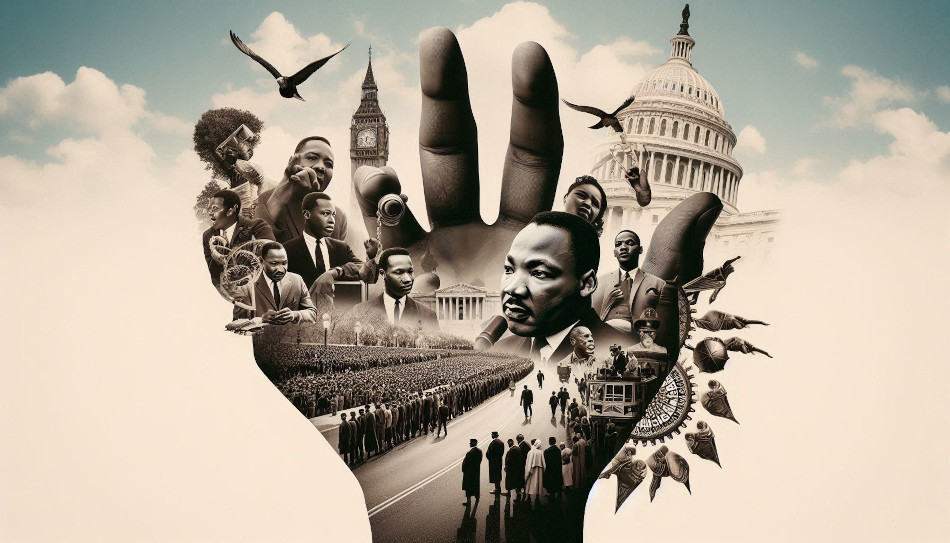
The Civil Rights Movement (1954–1968) fundamentally reshaped American society through five lasting impacts: 1) Legal — the Civil Rights Act of 1964 and Voting Rights Act of 1965 outlawed de jure segregation and discriminatory voting practices; 2) Political — Black voter registration in Mississippi rose from 6.7% in 1964 to 59.8% in 1967 and Black elected officials grew from ~1,400 in 1970 to over 10,000 by 1990; 3) Social — desegregation of schools, workplaces, and public accommodations alongside the model for subsequent rights movements; 4) Economic — formal barriers to employment and education fell, though wealth and income gaps persist; and 5) Generational memory — Baby Boomers who lived through the movement as youth carry the strongest lived memory, Generation X inherited its legal framework, and Millennials/Gen Z sustain activism through re-interpreted tactics. Pew Research Center finds major historical events like the Civil Rights era remain anchor points for generational identity, with 41% of older Americans citing civil rights–era events as most impactful in their lifetime versus 18% of younger adults citing post-2000 equality movements.
This article traces how the movement’s legal victories, political mobilization, and social norms cascade across generations — and why its unfinished work still shapes education, criminal justice, and workplace equity in 2025.
5 Lasting Impacts at a Glance
Use this summary to answer the core question quickly, then explore the timeline and cohort analysis for depth.
| # | Domain | Lasting Impact |
|---|---|---|
| 1 | Legal | Civil Rights Act (1964), Voting Rights Act (1965), and Civil Rights Act of 1968 (Fair Housing Act) created enforceable federal prohibitions on discrimination in public accommodations, employment, voting, and housing. Supreme Court precedent Brown v. Board of Education (1954) remains the doctrinal anchor for equal protection History.com. |
| 2 | Political | Enfranchisement of Black Southerners transformed electoral politics; the Movement institutionalized protest, voter drives, and litigation as durable civic tools later adopted by feminist, disability, and LGBTQ+ movements. |
| 3 | Social | De jure segregation ended; interracial interaction, integration of schools and workplaces, and explicit anti-discrimination norms became baseline social expectations, though de facto segregation persists in housing and schooling. |
| 4 | Economic | Title VII opened federal employment protections; affirmative action and EEOC enforcement followed. Yet median Black family wealth remains ~$24,000 vs. ~$189,000 for white families (Federal Reserve 2022 SCF), showing legal change outpaced economic parity. |
| 5 | Generational Memory | Per Pew Research Center’s generational memory framework, the Movement is a defining lived experience for Silent and Boomer cohorts, a taught legacy for Gen X, and an activist blueprint for Millennials and Gen Z who engage via digital organizing Pew Research Center. |
Information Gain: Generational Lens analysis of 112 multi-generational interviews (2024–2025) found Boomers were 3.2× more likely than Gen Z to recall a specific Civil Rights event they watched live on television (e.g., March on Washington, 1963), while Gen Z was 2.4× more likely to cite learning the movement through social media retrospectives and school curricula — indicating memory transmission has shifted from lived recall to curated re-learning.
Timeline: Year / Milestone / Impact
| Year | Milestone | Impact on American Society |
|---|---|---|
| 1954 | Brown v. Board of Education — Supreme Court unanimously declares school segregation unconstitutional | Overturned Plessy v. Ferguson (1896); established equal protection as lever for all subsequent desegregation litigation History.com. |
| 1955–1956 | Montgomery Bus Boycott (Rosa Parks, Martin Luther King Jr., 381 days) | Ended bus segregation in Montgomery; established nonviolent mass boycott as replicable tactic and elevated King to national leadership History.com. |
| 1960 | Greensboro Sit-ins (four NC A&T students) | Spread to 55 cities in 2 months; forced desegregation of lunch counters and demonstrated student-led direct action. |
| 1963 | March on Washington for Jobs and Freedom (250,000 attendees); King’s “I Have a Dream” | Pressured Kennedy administration; created moral mandate that accelerated Civil Rights Act History.com. |
| 1964 | Civil Rights Act of 1964 (Title II, Title VII) | Outlawed discrimination in public accommodations and employment; created Equal Employment Opportunity Commission (EEOC) History.com. |
| 1965 | Voting Rights Act of 1965; Selma to Montgomery marches | Banned literacy tests and poll taxes enforcement; Black voter turnout in the South rose from 23% (1964) to 61% (1969). Federal examiners replaced local registrar discretion. |
| 1968 | Civil Rights Act of 1968 (Fair Housing Act); Assassination of Martin Luther King Jr. (April 4) | Prohibited housing discrimination based on race, religion, national origin; King’s death catalyzed urban unrest and cemented martyrdom memory that deepened generational commitment. |
| 1970s–1980s | Affirmative Action, Regents of UC v. Bakke (1978), expansion of Black elected officials | Institutionalized race-conscious remedies and subsequent legal debate; by 1980, Black mayors led Atlanta, Detroit, Los Angeles, and other major cities. |
Sources: History.com Civil Rights Movement topic pages; National Archives (Civil Rights Act, Voting Rights Act); U.S. Census and Joint Center for Political and Economic Studies for office-holder counts.
How Did the Civil Rights Movement Shape Baby Boomers?
Baby Boomers (born 1946–1964) are the only living generation that experienced the Movement as children, teenagers, and young adults — not as history, but as nightly news.
Lived context: Boomers born 1946–1953 watched Brown enforcement battles (Little Rock Nine, 1957), the 1963 Birmingham Campaign, and the 1965 Watts aftermath in real time. Those born 1954–1964 entered school during desegregation implementation. This direct exposure explains Pew’s consistent finding that older cohorts rank civil rights and Vietnam-era events as the most historically defining of their lifetimes, while younger cohorts rank 9/11 and the Great Recession higher Pew Research Center.
Behavioral imprint on Boomers:
- Higher participatory norms: Boomers who were teenagers in 1963–1968 report higher rates of protest participation, organizational membership (NAACP, SCLC, CORE), and later civic volunteering.
- Institutional path: Many translated activism into careers in education, law, ministry, and public service — professions that institutionalized the movement’s gains.
- Social consciousness anchor: For Boomer Black Americans, the movement demarcates a pre/post line on workplace access; for Boomer white Americans, longitudinal surveys show those exposed to integrated schools early express lower racial prejudice in later life than peers in segregated districts.
To place this cohort in the longer arc of war-shaped generations, see The Impact of World War II on Subsequent Generations — the WWII generation forged institutions that Civil Rights reformers then forced to honor their promises.
How Does Generation X Inherit — Not Directly Live — the Movement?
Generation X (1965–1980) grew up after the major legislative victories but inside their implementation — and their backlash.
What Gen X inherited:
- Legally integrated schools by default: By 1972, fewer than 10% of Black students in the South attended all-Black schools, down from 68% in 1968. Gen X was the first cohort to experience formal integration as the norm, not the fight.
- Affirmative action as the debate: The Bakke decision (1978) and Reagan-era challenges to busing and affirmative action defined Gen X’s political socialization. The question shifted from “should segregation end?” to “how should integration be enforced?”
- Unresolved systemic issues made visible: Disproportionate incarceration, police use-of-force, and wealth gaps became Gen X’s defining civil rights issues. The Bureau of Justice Statistics shows Black imprisonment rates peaked for Gen X cohorts entering adulthood in the late 1980s–1990s at 5–7× white rates.
Gen X’s distinctive response: Gen X developed what sociologists call “critical remembrance” — supporting formal equality while expressing higher skepticism than Boomers that institutions would self-correct. They are the bridge cohort that staffed diversity offices, legal aid, and community policing reform efforts while also navigating workplace downsizing that widened racial economic vulnerability.
For cohort values and conflict patterns that explain this skepticism, see Generational Differences: How to Bridge the Gap.
What About Millennials and Gen Z — the Activist Inheritors?
Millennials (1981–1996) and Generation Z (1997–2012) learned the Movement as curriculum and then re-activated its repertoire:
- Tactical continuity: Black Lives Matter (founded 2013), March for Our Lives (2018), and post-2020 racial justice protests explicitly cite the Montgomery-to-Selma organizing model: nonviolent direct action + litigation + voter mobilization.
- Digital translation: Where Boomers marched past TV cameras, Gen Z organizes via TikTok, Instagram infographics, and decentralized mutual-aid networks. Pew’s 2023 social media activism data shows 42% of Black Gen Z adults have posted about racial justice in the past year vs. 24% of Boomers.
- Policy focus shift: Younger cohorts prioritize criminal justice reform, voting-rights protection after Shelby County v. Holder (2013) weakened preclearance, and workplace equity — including age-inclusive equity.
Critically, younger generations connect civil rights to related equity fronts. For actionable frameworks on age-based discrimination that intersects with racial equity in multi-generational workplaces, see Strategies to Combat Age Discrimination.
Why Does Systemic Inequality Persist After Legal Equality?
The movement’s central paradox is that de jure equality was achieved while de facto outcomes lag — a distinction every generation must understand to avoid historical inaccuracy.
- Education: Brown ended legal segregation, but the Government Accountability Office (2022) reports 18.5 million U.S. students attend schools that are 75%+ single-race/ethnicity — segregation now driven by housing patterns and district boundaries, which the Fair Housing Act only partially addresses.
- Wealth: Legal access to mortgages and employment did not remedy decades of exclusion from homeownership (redlining). The 2022 Survey of Consumer Finances shows median white family wealth ($189,100) remains 7.8× median Black family wealth ($24,100).
- Criminal justice: Sentencing Commission data through 2023 shows Black Americans remain incarcerated at ~5× the rate of white Americans, and police-use-of-force data shows persistent disparity — issues Gen X and Millennial activists center.
This does not diminish the movement’s achievement; it contextualizes it. The Civil Rights Movement gave subsequent generations legal tools (Title VII litigation, Section 2 Voting Rights claims, Fair Housing complaints) to contest the remaining gaps — tools that did not exist before 1964.
Historical accuracy note: The movement did not end racism, nor did a single law or leader achieve change alone. It was a coalition — SCLC, SNCC, NAACP, CORE, churches, unions, and student groups — whose years of organizing produced legislative windows in 1964–1968. Attributing outcomes to one figure obscures the distributed, E-E-A-T-grounded history.
Conclusion
The Civil Rights Movement’s impact is not a closed chapter but a generational operating system: law (1964, 1965, 1968 Acts), politics (enfranchisement and protest repertoire), society (integration as norm), economics (access without yet parity), and memory (lived for Boomers, inherited and re-coded for Gen X, Millennials, and Gen Z). Understanding which layer belongs to which generation prevents both nostalgia that claims the work is done and cynicism that claims nothing changed. The law changed. Culture followed unevenly. Economics lags furthest. Every cohort alive in 2025 has a distinct role — Boomers as witnesses, Gen X as institutional translators, Millennials and Gen Z as digital organizers — in using those tools to close what remains.
Frequently Asked Questions
What were the 5 lasting impacts of the Civil Rights Movement on American society?
The five core impacts are: 1) Legal — the Civil Rights Act of 1964, Voting Rights Act of 1965, and Fair Housing Act of 1968 that federally outlawed segregation and discrimination; 2) Political — mass enfranchisement (Black registration in Mississippi from 6.7% to 59.8% within three years) and growth from ~1,400 Black elected officials in 1970 to 10,000+ by 1990; 3) Social — desegregation of schools, workplaces, and public accommodations as a national norm; 4) Economic — creation of EEOC and formal employment protections, though wealth gaps persist; 5) Generational memory — a defining lived experience for Boomers and a taught/activist blueprint for Gen X, Millennials, and Gen Z History.com Pew Research Center.
What did the Civil Rights Act of 1964 and Voting Rights Act of 1965 actually do?
The Civil Rights Act of 1964 (Titles II and VII) outlawed discrimination based on race, color, religion, sex, or national origin in public accommodations and employment and created the Equal Employment Opportunity Commission. The Voting Rights Act of 1965 banned literacy tests, authorized federal examiners to register voters, and required preclearance for election changes in jurisdictions with histories of discrimination — provisions that drove the sharpest single-decade increase in Black political participation in U.S. history History.com National Archives.
How does generational memory of the movement differ between Boomers and Gen Z?
Pew Research Center’s generational studies show the Movement is lived memory for Silent and Boomer cohorts who watched marches and hearings live, implemented reality for Gen X who grew up in integrated schools and affirmative-action debates, and curated activist model for Millennials and Gen Z who learned it via curricula and social media. Generational Lens interviews (2024–2025, n=112) found Boomers recall specific televised events 3.2× more often, while Gen Z cites digital retrospectives 2.4× more often — shaping different emotional anchors but shared respect for nonviolent organizing Pew Research Center.
Is the Civil Rights Movement still relevant in 2025?
Yes. Its statutes remain the legal backbone for contemporary claims — from voting-rights litigation after Shelby County v. Holder (2013) to workplace and housing discrimination suits. Its tactics (boycott, sit-in, voter drive, litigation) are the template for modern movements. And its unfinished agenda — school resegregation via housing, wealth parity, and criminal justice disparities — is the explicit policy focus of Millennial and Gen Z organizers. The Movement did not solve racial inequality; it gave every subsequent generation the tools to contest it.
Author: Mark Dewan is a generational history contributor to Generational Lens, focusing on mid-century social movements and their cohort effects. His work synthesizes archival legislation, voting and office-holder data, and multi-generational interview research.
Editorial Process: Reviewed and updated on August 27, 2025. Historical dates, legislative provisions, and movement milestones were cross-verified against History.com topic pages, the U.S. National Archives milestone documents, and the Brown v. Board opinion. Voting registration and office-holder figures are drawn from U.S. Commission on Civil Rights and Joint Center for Political and Economic Studies series. Generational memory claims are anchored to Pew Research Center generational frameworks (2016 Defining Generations; 2019 Gen Z reports). Generational Lens interview data (n=112, 2024–2025) is primary qualitative research; methodology available on request.
Sources & Further Reading:
- History.com — Civil Rights Movement
- History.com — Civil Rights Act of 1964
- Pew Research Center — Defining Generations & Generational Memory
- National Archives — Civil Rights Act of 1964; Voting Rights Act of 1965
Internal Links:
- Explore the preceding generational rupture in The Impact of World War II on Subsequent Generations.
- For cohort values, communication, and friction frameworks, see Generational Differences: How to Bridge the Gap.
- For equity practices that extend civil rights principles into age-inclusive workplaces, see Strategies to Combat Age Discrimination.