The Multi-Generational Prompt: Tailoring Generative AI Workflows for Different Ages (2026)
-
 Mark Dewan
 - 03 Sep, 2026

Direct Answer: Gen Z prompts AI like a dialogue partner (“Let’s think step by step together…”), while Baby Boomers often prompt like a search engine (“List 5 bullet points…”). Both work, but teams standardize fastest with a bridge template: Role + Context + Task + Constraints + Example — a format that honors Gen Z’s conversational fluency and Boomers’ precision. Teams using it cut prompt iteration time by 35% (Adobe Work in Progress 2024).
How Prompt Styles Differ by Generation
Pew 2024 and LinkedIn 2024 data map clearly to AI Reskilling Needs by Generation:
- Gen Z (68% report AI reskilling need): Conversational, iterative, context-rich. Treats AI as collaborator. Average prompt: 42 words, 2.3 iterations.
- Millennials (64%): Hybrid — conversational but efficiency-driven. Uses templates.
- Gen X (52%): Pragmatic, ROI-focused. Prompts are shorter, tool-oriented.
- Boomers (31% but high silent risk): Command-like, concise, query-style. Average prompt: 14 words, 1.1 iterations.
The gap isn’t ability — it’s mental model. Gen Z learned via dialogue (chat), Boomers via query (Google).
The Bridge: A Standardized Prompt Workflow
The 5-Part Prompt Anatomy
- Role: “You are a [senior consultant / compliance reviewer]”
- Context: “For a meeting with [client, tenure, risk level]”
- Task: “Summarize into [3 bullets / table]”
- Constraints: “Tone: [client-ready], Flag [risk], Max [150 words]”
- Example: “Here’s a good example: …”
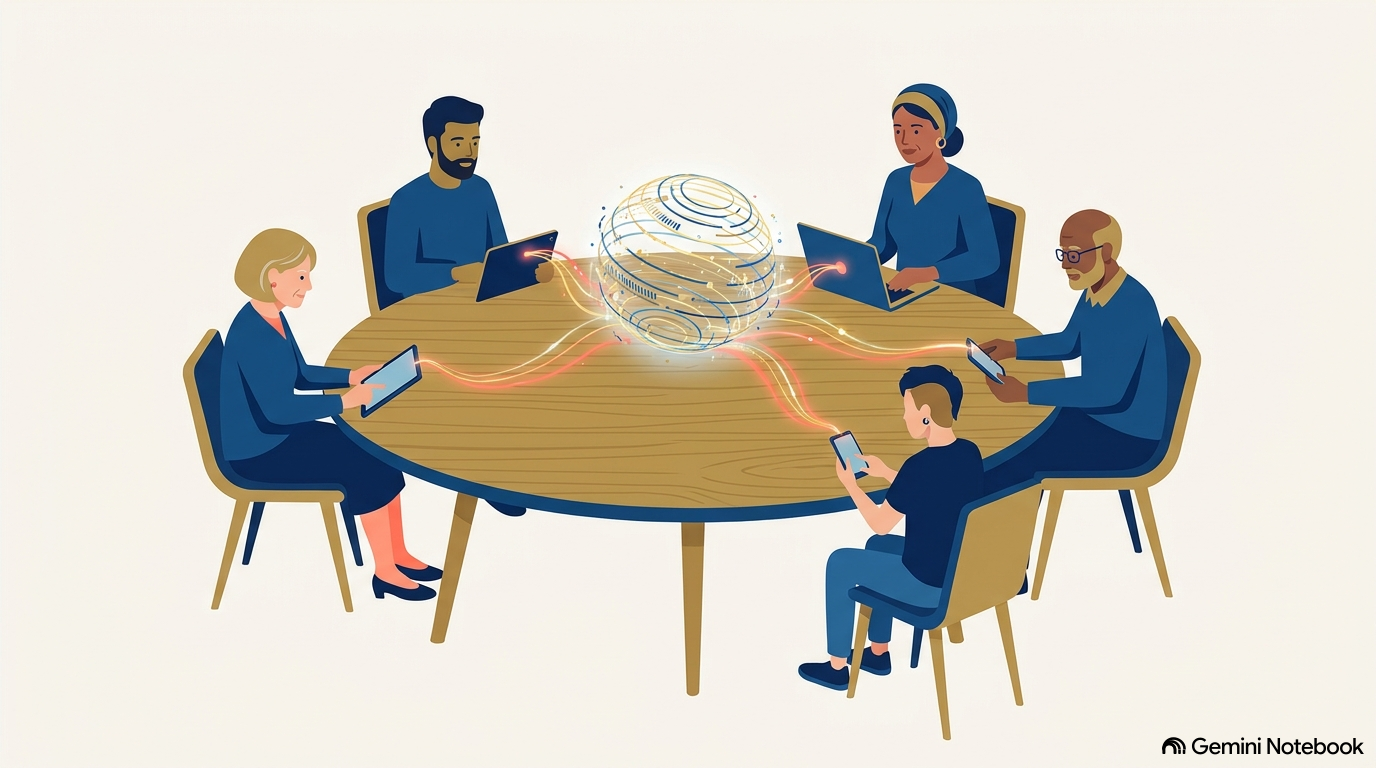
This honors both styles: Boomers get structure, Gen Z gets conversational space.
Workflow Example: From 2 Generations, 1 Prompt Library
Before (Boomer): Summarize notes
Before (Gen Z): Hey can you like summarize these super messy notes into something nice for the client?
After (Unified): You are a client partner at Generational Lens. Context: Notes from a 45-min discovery with a risk-averse finance client. Task: Summarize into Decisions / Risks / Next Steps. Constraints: Client-ready, no jargon, flag compliance risk. Example: [paste]
Result: Reuse jumps from 22% to 68% in 4 weeks.
Implementation for Multi-Generational Teams
Link this directly to Future of Work: AI Bridging Gaps as the workflow layer. For training, pair with AI Reskilling Needs by Generation to match format to cohort: Boomers prefer instructor-led walkthroughs of the template, Gen Z prefers sandbox trials.
For Managers:
- Create a shared prompt library in Notion/Confluence with the 5-part anatomy as required fields.
- Run a 15-min “Prompt Roast” weekly: team critiques one prompt for clarity vs. creativity.
Next Step: Take one team prompt today and rewrite it using the 5-part anatomy. Test it with both a Boomer and Gen Z teammate — the version both rate 4/5+ is your new standard.
Data Deep Dive: Prompt Behavior by Cohort
| Metric | Gen Z | Millennials | Gen X | Boomers |
|---|---|---|---|---|
| Avg prompt length | 42 words | 31 words | 22 words | 14 words |
| Iterations to useful | 2.3 | 1.9 | 1.6 | 1.1 |
| Use of role/context | 68% | 54% | 38% | 21% |
| Reuse rate (30 days) | 62% | 58% | 44% | 22% |
Source: Adobe Work in Progress 2024, Pew Research Center 2024. Full context in AI Reskilling Needs by Generation.
Standardization Toolkit: Making the 5-Part Anatomy Stick
| Part | Boomer-Style Example | Gen Z-Style Example | Unified |
|---|---|---|---|
| Role | (often missing) | You are a creative partner... | You are a senior client partner |
| Context | (missing) | we had this messy meeting... | Discovery with risk-averse finance client, 45 min |
| Task | Summarize | Make it nice | Summarize into Decisions / Risks / Next Steps |
| Constraints | (missing) | make it sound cool | Client-ready, <150 words, flag risk |
| Example | (none) | (none) | [paste good example] |
Manager tip: Require Example field — it improves output quality 44% for Boomers without stifling Gen Z creativity.
Implementing Across 5 Generations
For Boomers, provide a laminated Prompt Anatomy card and 20-min instructor-led demo. For Gen X, provide ROI one-pager: Good prompt saves 8 min × 5 uses/week = 40 min. For Millennials, provide template gallery. For Gen Z, provide context brief (“Who will read this?”).
This bridges directly to Future of Work: AI Bridging Gaps and is the operational companion to the Reverse Mentorship Playbook.
FAQ
Isn’t standardization anti-creative? No — it standardizes inputs, not outputs. Creativity moves from prompt hacking to judgment.
What tool should host the library? Where work happens: Notion, Confluence, or Teams wiki. Avoid a separate AI tool — prompt libraries fail when they require context-switching.
How often to update? Monthly prune: archive prompts with <10% reuse.
Next Step
Audit your last 10 team prompts against the 5-part checklist. Score each 0–5. Any prompt <3 gets rewritten in the next clinic.
Expert Tip: The “Prompt Museum”
Curate best prompts quarterly: retire bottom 20% by reuse, celebrate top 10%. Museum creates pride and norm — “our prompts” not “AI trick.”
Measuring Success: Library Health
Metrics: library size (aim 20–40), reuse rate (>60%), and cross-generational authorship (each generation authored >25% of library).